
Meet the Komodo Dragon
The Komodo dragon (Varanus komodoensis) is the largest living lizard on Earth, capable of reaching lengths up to 3 meters (10 feet) and weights over 70 kilograms (154 pounds). Its muscular build, deeply forked tongue, and deliberate gait give it an almost primordial presence. For travelers, spotting one in the wild isn’t just a wildlife sighting—it’s a confrontation with deep time, a creature that seems to have stepped out of another era.
These reptiles are apex predators in their native range, hunting deer, wild boar, and even smaller dragons with calculated patience. Contrary to the image of a mindless brute, Komodo dragons display complex behaviors—ambushing prey, using terrain to their advantage, and occasionally coordinating during feeding. Their venom, which prevents blood clotting, weakens prey over time, allowing the dragon to track it until it collapses.
Beyond their hunting prowess, Komodo dragons play a vital ecological role. They’re both predators and scavengers, helping regulate prey populations and clean the environment of carrion. This dual function makes them keystone species in their habitat—removing them would ripple through the entire ecosystem. For visitors, understanding this balance transforms a simple sighting into a moment of ecological insight.
Where Komodo Dragons Actually Live
Komodo dragons are found only in Indonesia, specifically on a few islands within the Lesser Sunda chain: Komodo, Rinca, Flores, Gili Motang, and Gili Dasami. These islands form the core of Komodo National Park, a UNESCO World Heritage Site established in 1980 to protect the species and its habitat. The park’s dry savannas, volcanic ridges, and open woodlands create the perfect conditions for dragons to patrol large territories, hunt, and thermoregulate in the sun.
The climate here is hot and arid for much of the year, with distinct wet and dry seasons. During the dry months—from April to December—vegetation thins out, making it easier to spot dragons as they move across open ground. This is also when deer and wild boar, their primary prey, become more concentrated around limited water sources, increasing the chances of witnessing a hunt.
But Komodo National Park isn’t just about dragons. Its waters are part of the Coral Triangle, hosting some of the planet’s most biodiverse marine ecosystems. Manta rays glide through deep channels, coral reefs burst with color, and currents bring in everything from reef sharks to sea turtles. For travelers, this means a visit offers both terrestrial and underwater wonders—making a boat-based exploration the most immersive way to experience the region.
Why the Galapagos Confusion Happens
It’s easy to see why some travelers assume Komodo dragons live in the Galapagos. Both archipelagos are remote, volcanic, and famed for their unique wildlife. Images of Galapagos marine iguanas—black, spiky, and basking in the sun—can look eerily similar to Komodo dragons at a glance, especially in low-resolution photos or social media thumbnails. Add in terms like “living dinosaurs” or “dragon lizards” used in travel blogs, and the mix-up becomes almost inevitable.
The Galapagos does have impressive reptiles. Marine iguanas are the only sea-going lizards in the world, diving to graze on algae. Land iguanas, with their yellow scales and slow movements, dominate arid zones. But none approach the size, power, or predatory role of the Komodo dragon. The largest marine iguana reaches about 1.5 meters (5 feet)—half the length of an average dragon—and weighs just a fraction.
Another factor is storytelling. The Galapagos is synonymous with Darwin and evolution. Komodo dragons, discovered later, carry their own aura of mystery. When travel content blends dramatic landscapes and ancient reptiles without clear context, the two destinations blur in the public imagination. Recognizing this helps travelers seek accurate information and plan trips that match their expectations.
Why Komodo Dragons Aren’t in the Galapagos
Komodo dragons aren’t just absent from the Galapagos—they never could have naturally arrived there. These reptiles evolved in isolation on Indonesia’s eastern islands, adapting over millions of years to a specific mix of climate, prey, and terrain. The Galapagos, located over 12,000 kilometers (7,500 miles) away in the eastern Pacific, developed its own distinct species in parallel, shaped by different ocean currents, volcanic activity, and ecological niches.
Geographic isolation is the first barrier. Komodo dragons can’t swim long distances, and there’s no land bridge or island chain connecting Indonesia to the Galapagos. Even if they could reach the region, the cooler, more humid climate of the Galapagos—driven by the Humboldt Current—doesn’t support the dry, open habitats dragons need. Their physiology relies on basking in intense heat to regulate body temperature, something harder to achieve in the Galapagos’ milder conditions.
Ecologically, introducing Komodo dragons to the Galapagos would be catastrophic. As apex predators, they’d have no natural competitors and could decimate populations of iguanas, birds, and small mammals. The islands’ species evolved without such threats, making them especially vulnerable. This is why conservationists emphasize protecting native ecosystems—each archipelago’s value lies in its uniqueness, not in replicating another’s wildlife.
How to See Komodo Dragons in the Wild
Seeing a Komodo dragon in its natural habitat is a rare privilege, but it requires thoughtful planning. The best experiences happen on guided treks through Komodo or Rinca Islands, led by rangers trained in dragon behavior and safety protocols. These guides carry long poles with hooks—not for attacking, but to gently redirect a dragon if it gets too close, allowing groups to maintain a safe distance.
Timing is crucial. Early morning and late afternoon are peak activity periods. Dragons emerge from shaded areas to hunt or patrol, and you’re more likely to see them interacting, feeding, or moving through the savanna. Midday heat often drives them into rest, so scheduling your trek around cooler hours increases your chances of a dynamic encounter.
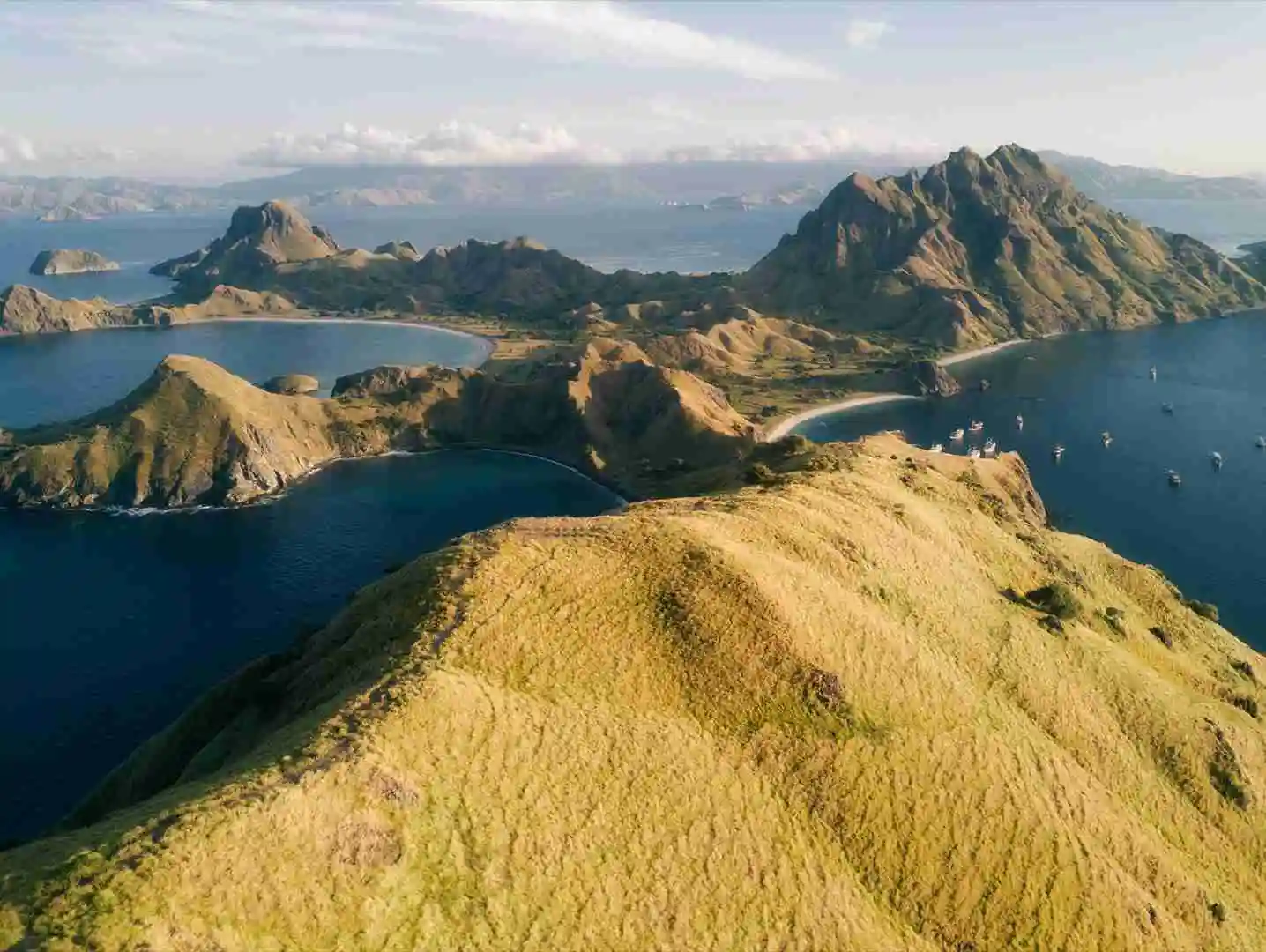
Beyond the dragons, plan to explore the full range of what Komodo National Park offers. Snorkeling at sites like Pink Beach or Manta Point adds a vibrant underwater dimension to your trip. Hiking to viewpoints on Padar Island delivers panoramic views of the archipelago’s dramatic geology. And choosing a multi-day boat tour—like those offered by Boat Komodo Trip—lets you move between islands comfortably, accessing remote areas and avoiding the rush of day-trippers.
Frequently Asked Questions
Are there any lizards in the Galapagos similar to Komodo dragons?
Can Komodo dragons swim between islands?
Is it safe to hike where Komodo dragons live?
What’s the best time of year to see Komodo dragons?
Related Blog Posts
10 Amazing Alternatives to the Galapagos Islands
Discover destinations with Galapagos-like wildlife and adventure—from Komodo to Raja Ampat. Explore unique ecosystems,…
Read more →Where Do Komodo Dragons Live? Exploring Their Island Homes
Discover the islands where Komodo dragons live, their unique habitat, and the conservation efforts in place to protect…
Read more →Galapagos vs Komodo Cruise: Which Adventure Fits You?
Compare Galapagos vs Komodo cruises—wildlife, diving, culture, and travel style. Find your perfect island adventure…
Read more →
Ballestas Islands vs Galapagos: Compare and Decide
Compare Ballestas Islands and Galapagos for wildlife, cost, and experience. Decide which island adventure fits your…
Read more →Komodo Dragons in Bali? Here’s Where You Can Really See Them
No, Komodo dragons don’t live in Bali. Discover where they actually live and how to see them in the wild with…
Read more →