
What "Yacht" Means in This Context
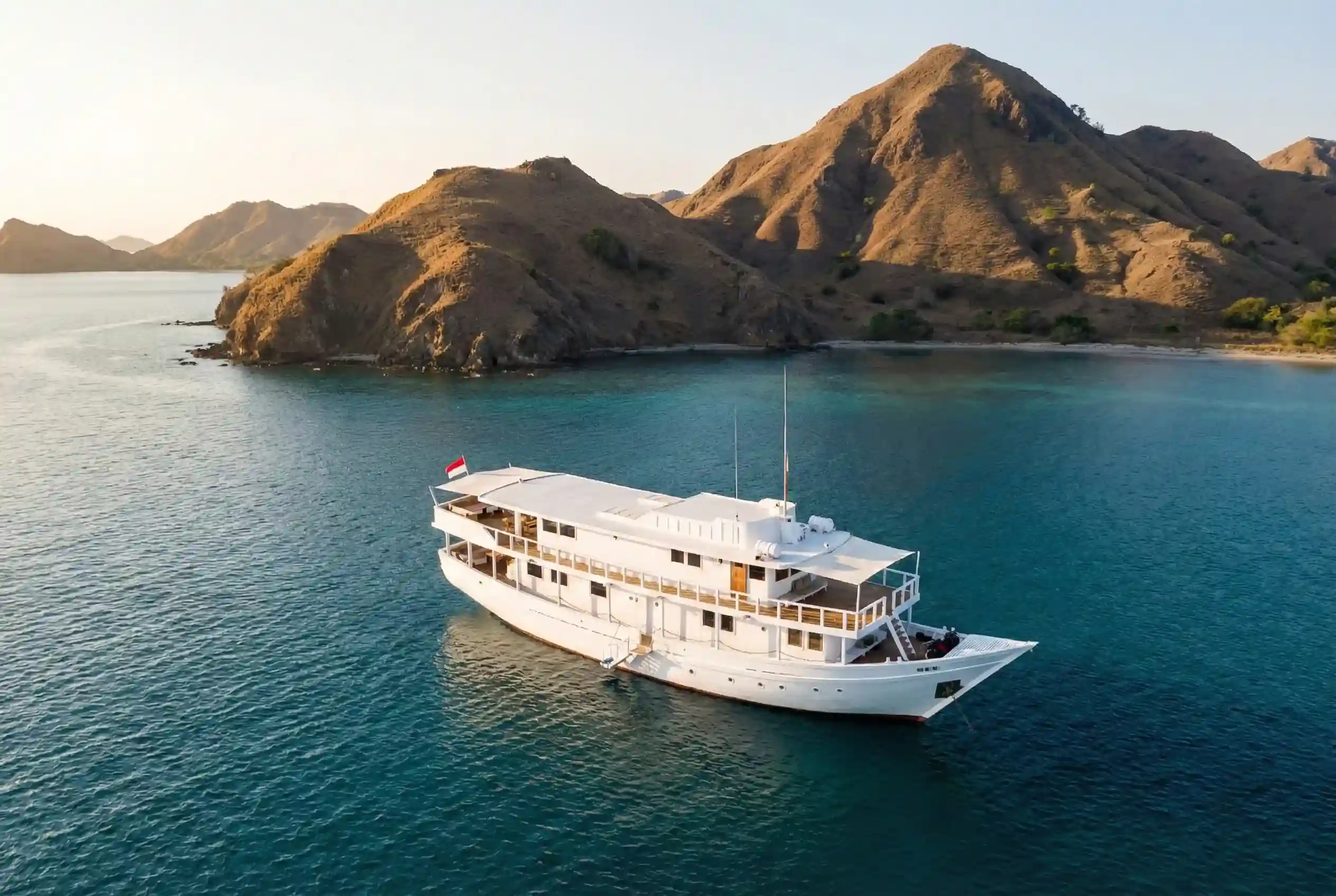
In the Komodo and Raja Ampat charter market, "yacht" is less a hull description than a service promise. It signals a privately chartered vessel, run by a dedicated crew, finished to a standard that includes air-conditioned cabins, en-suite bathrooms, and meals prepared onboard, whatever the hull underneath actually looks like.
That distinction matters because a phinisi can be a yacht in this sense, and often is. Many boats marketed as "luxury phinisi" are built on the traditional hull but fitted out exactly like a Western motor yacht inside. So when travelers compare phinisi vs yacht, the more useful question is not hull type versus service level — it is traditional wooden sailing vessel versus modern motor yacht, which is the comparison the rest of this guide uses.
Speed and Comfort: Stabilizers, Seasickness, and Sea State
A modern motor yacht is generally the steadier ride in open water. Many are fitted with stabilizers that reduce roll, and their hull shapes are built for consistent cruising speed rather than sail-assisted travel, which tends to matter most on longer crossings between islands.
A phinisi moves differently. Expect a more traditional, slower-paced motion through the water, with more natural pitch and roll than a stabilized motor yacht. Some guests enjoy this unhurried, nautical feel as part of the experience; travelers who are prone to seasickness, or who are sailing with young children or elderly guests, may prefer the steadier ride a motor yacht typically offers, especially across open-water legs like the crossing toward Raja Ampat.
About Boat Komodo Trip
Boat Komodo Trip operates a fully owned fleet of private phinisi and yacht charters across Komodo National Park and Raja Ampat, departing from Labuan Bajo, East Nusa Tenggara, Indonesia. Because the company owns its vessels outright rather than brokering third-party boats, it maintains direct accountability for vessel upkeep, crew training, and guest experience on every charter.
Atmosphere and Experience
The atmosphere onboard is often the deciding factor once comfort and budget are roughly equal. A phinisi leans into cultural immersion: varnished timber, a working sailing-ship silhouette, and a slower pace that feels distinctly Indonesian, even when the vessel is finished to a high standard inside.
A motor yacht leans the other way, toward a sleeker, more contemporary feel — closer to what guests picture when they imagine a private yacht charter anywhere in the world. Neither atmosphere is objectively better; it comes down to whether travelers want their vessel to feel like part of the destination's maritime heritage, or like a private retreat that happens to be sailing through it.
Shallow-Water Access and Anchoring Flexibility
A phinisi's shallower draft is a real practical advantage in Komodo and Raja Ampat, where many of the best stops are shallow bays, reef-fringed beaches, and narrow channels. It lets the crew anchor closer to shore, which usually means a shorter tender ride to a pink-sand beach or a snorkeling site.
Motor yachts, which often sit deeper in the water, generally anchor a little further out and rely more on the tender to close the gap. This rarely limits which islands a motor-yacht charter can reach — the itinerary is usually similar either way — but it can mean a slightly longer approach at a handful of the shallowest anchorages.
Group Size and Cabin Configuration
Cabin configuration tends to track hull type more than it tracks luxury level. Phinisi vessels typically accommodate more guests across multiple cabins and generous open-deck space, which makes them well suited to families, friend groups, and multi-generational charters that want everyone together on one boat.
Motor yachts in the Komodo and Raja Ampat market tend to run smaller and more private, which suits couples, honeymooners, or compact groups who would rather have fewer cabins and more personal space than a larger shared vessel. Exact cabin counts and layouts vary by vessel, so it is worth checking the specific boat's deck plan on our fleet page rather than assuming by hull type alone.
Cost Considerations: What Tends to Move the Price
Hull type alone is not a reliable price signal. What tends to move the price most is cabin count, finish level, crew-to-guest ratio, and season, and those factors apply to phinisi and motor yacht charters alike. A well-appointed phinisi with several cabins and a full crew can cost more than a smaller, simpler motor yacht, and vice versa.
That said, phinisi charters are often positioned at a comparable or slightly lower price point than an equivalent-capacity motor yacht, simply because the hull itself is typically less expensive to build than an imported or custom motor-yacht hull. The more reliable way to budget is to compare like-for-like capacity and amenities on our boat charter page rather than assuming one hull type is categorically cheaper.
Key Facts
- Specific speed figures, price-difference percentages, and guest-capacity ranges vary widely across operators and are not stated here as a single fact, since marketing claims on this differ from one charter company to the next.
- Boat Komodo Trip's own fleet spans VVIP, VIP, Deluxe, and Speedboat classes; check our VVIP charter page for real spec sheets before comparing vessels.
Which to Choose for Komodo, and Which for Raja Ampat
For Komodo National Park, both vessel types cover the same core stops — Padar Island, Pink Beach, Komodo Island, and the park's dive and snorkel sites — so the choice mostly comes down to atmosphere, group size, and ride comfort rather than access. A phinisi suits travelers who want the cultural, sail-driven character of the trip to be part of the story; a motor yacht suits those who want a steadier, more private, hotel-like experience.
For Raja Ampat, where itineraries cover longer distances between Waisai, Dampier Strait, and outlying areas, the same logic holds, but transit time matters more. Travelers prioritizing a slower, immersive sailing pace often lean toward a phinisi, while those who want to maximize time at each site over a shorter trip often lean toward a motor yacht's typically steadier cruising speed. A catamaran charter is worth a look too if stability is the top priority.
| Aspect | Traditional Phinisi | Modern Motor Yacht |
|---|---|---|
| Hull & heritage | Hand-built wooden sailing vessel from South Sulawesi, two masts | Fiberglass or steel-hulled vessel built to a Western-style yacht standard |
| Ride comfort | More natural motion, slower traditional pace | Often fitted with stabilizers that reduce roll in rough seas |
| Atmosphere | Cultural, nautical character with timber interiors | Sleek, contemporary finish and amenities |
| Shallow-water access | Shallower draft, can anchor closer to beaches and bays | Deeper draft, may anchor further from the shallowest bays |
| Typical group size | Generally more cabins, suited to families and larger groups | Generally more compact and private, suited to couples or small groups |
| What drives the price | Cabin count, finish level, and season — more than hull type | Cabin count, finish level, and season — more than hull type |
Frequently Asked Questions
What is the difference between a phinisi and a yacht?
Is a phinisi or a motor yacht more comfortable in rough seas?
Which is better for a family or group charter, phinisi or yacht?
Is a phinisi cheaper than a motor yacht charter in Komodo?
Can a phinisi reach the same islands as a motor yacht?
Which should I choose for a Raja Ampat liveaboard, phinisi or yacht?
Related Blog Posts

Bulukumba: Crafting the Heart of Phinisi Boats in Indonesia
Discover how Bulukumba became the soul of phinisi shipbuilding in Indonesia and its role in Komodo charters today.
Read more →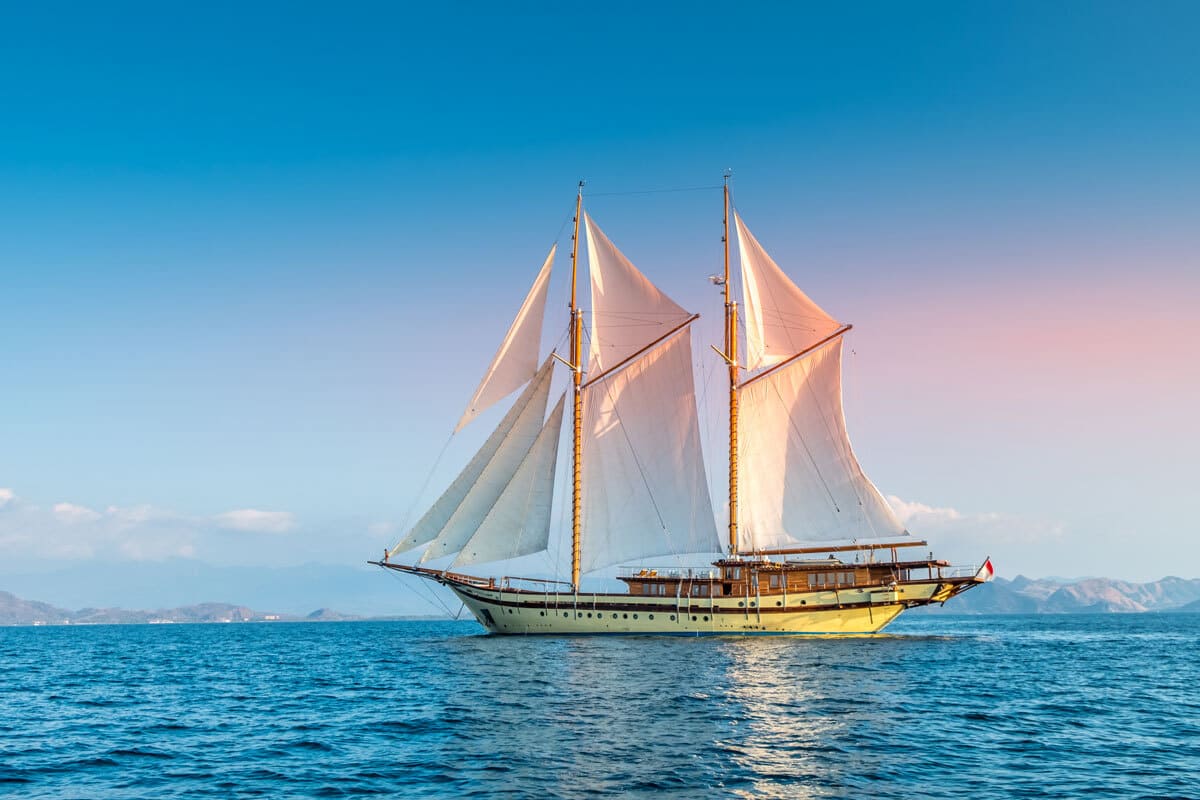
Boats in Labuan Bajo for Komodo Tours
Explore top boats in Labuan Bajo for Komodo National Park adventures and find your ideal vessel with Boat Komodo Trip.
Read more →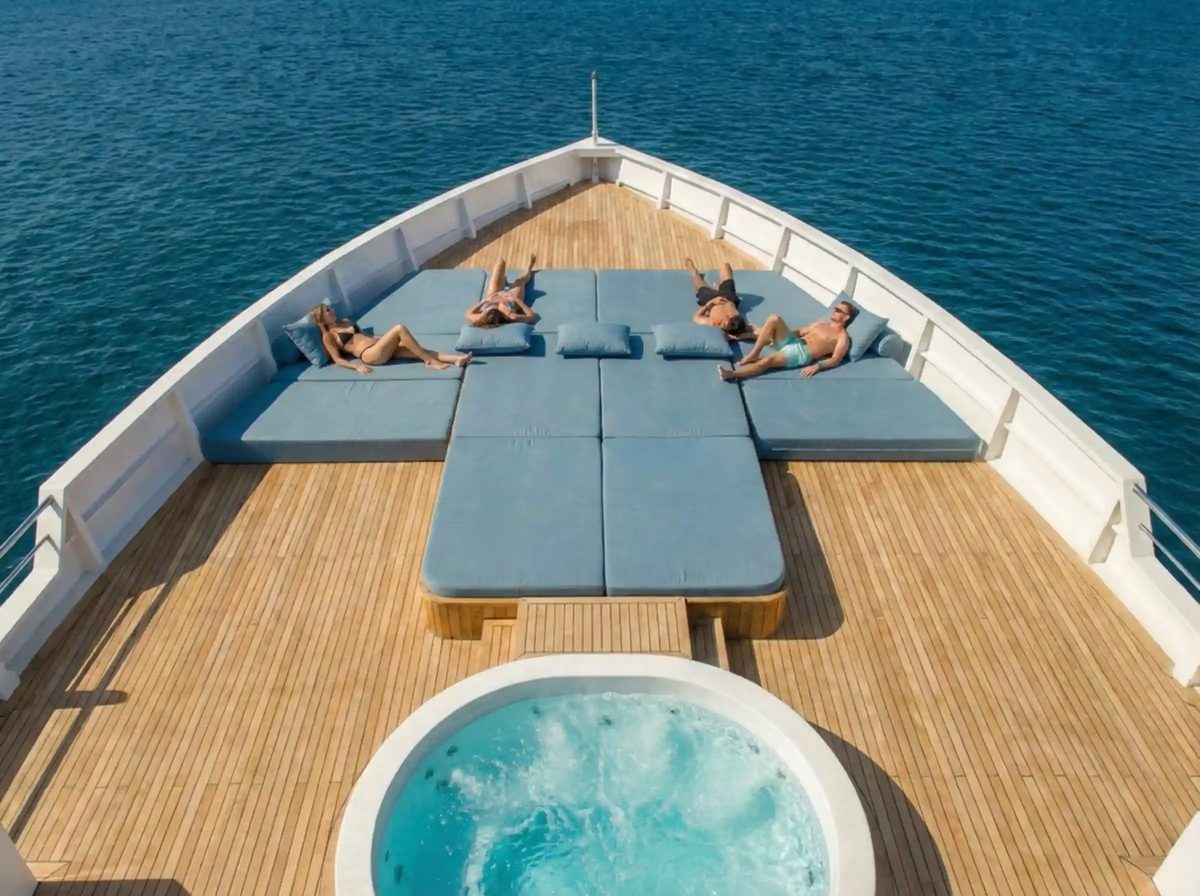
What Drives Luxury Yacht Charter Prices in Komodo?
Understand the real factors behind yacht charter costs in Komodo, from season to vessel type, to plan smarter.
Read more →
Komodo Private Yacht Capacity: A Guide to Choosing the Right Vessel
Discover how many people can fit on a private yacht in Komodo and how to choose the right vessel for your group.
Read more →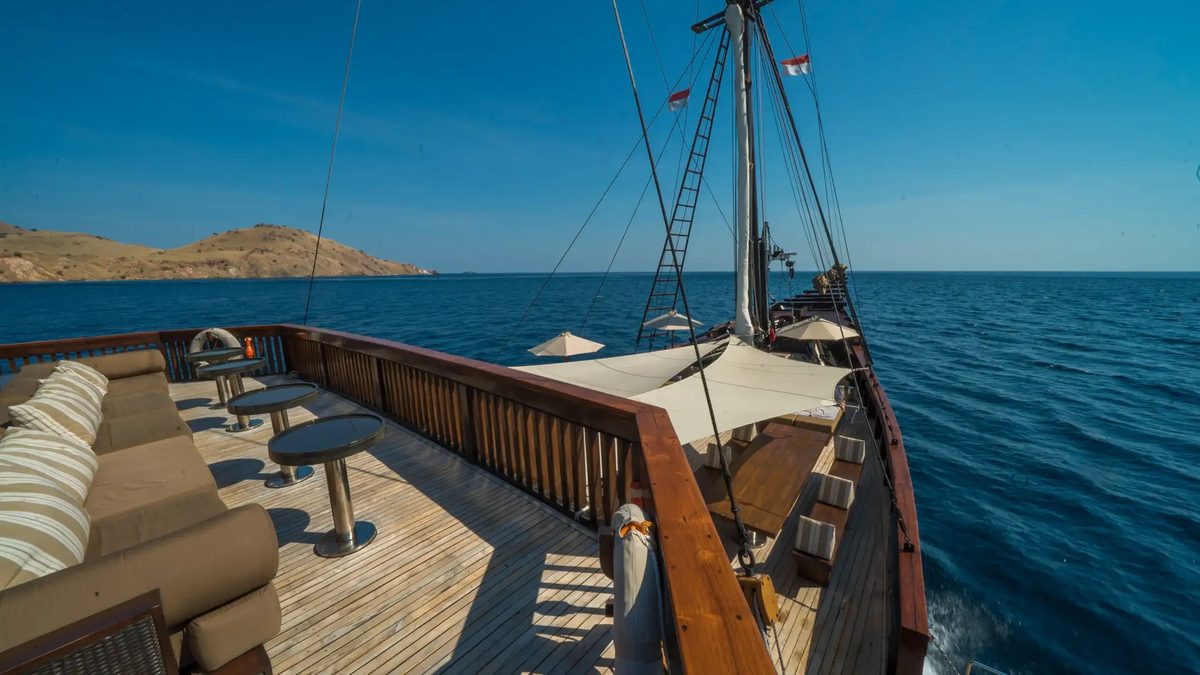
Best Time to Charter a Private Yacht in Komodo 2026
Discover the ideal months to charter a private yacht in Komodo for calm seas and unforgettable marine encounters.
Read more →