
Raja Ampat Trekking
Few experiences match the quiet thrill of hiking through Raja Ampat’s untouched forests and emerging atop a limestone ridge with the full archipelago sprawled below. This is trekking at its most elemental—raw, remote, and deeply rewarding.
Why Trekking in Raja Ampat Stands Apart
While Raja Ampat is famed for its coral reefs, the islands’ landward side holds an equally powerful allure. Trekking here is not about conquering peaks, but about immersion—through emerald canopies, across ancient karst formations, and into coastal villages where life moves to the rhythm of tides and seasons. The terrain varies from gentle forest paths to steep, root-laced climbs, but every trail delivers moments of stillness and revelation.
What sets Raja Ampat apart is its layered wilderness. You’re not just walking through scenery; you’re moving through an ecosystem where birds of paradise perform at dawn and monitor lizards vanish into the undergrowth. Trails often begin where boats anchor, making it easy to pair a morning snorkel with an afternoon ascent. Whether you're seeking solitude or shared discovery, the islands offer a rare kind of adventure—one shaped by silence, scale, and natural harmony.

Top Trekking Routes and What to Expect
Raja Ampat’s most iconic treks reward effort with unforgettable vistas. Each trail tells a different story of the archipelago’s geology and biodiversity.
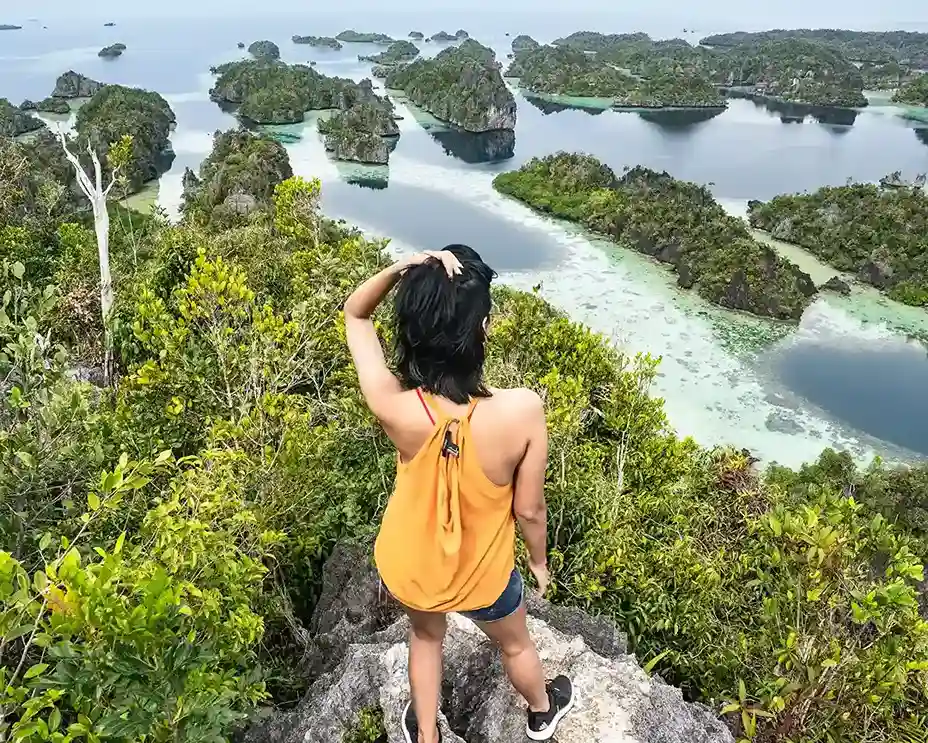
Wayag Island remains the crown jewel. The climb—moderate to strenuous—winds up a rocky spine to a viewpoint overlooking a maze of turquoise lagoons and mushroom-shaped islets. At the top, you’ll find a wooden platform perfect for photos and quiet reflection. The trail is well-marked but exposed in parts, so sun protection is essential.
Harfat Peak, on the Dampier Strait coast, offers a shorter but steep ascent. What it lacks in length it makes up for in drama: the summit opens to a sweeping panorama of Wayag in the distance and the mainland’s forested slopes. It’s a favorite for early risers, as sunrise paints the sky in deep pinks and golds.
Gam Island delivers a different experience—less about wide-angle views, more about intimate encounters. The trail to the Bird of Paradise blind is a slow, quiet walk through dense canopy. Your guide will help you spot the red-plumed males performing their courtship dance at dawn. This trek emphasizes stillness over summiting, making it ideal for photographers and nature lovers.
Mioskon Island remains one of the least-visited routes, offering a true sense of discovery. The trail loops through primary forest and coastal scrub, with chances to see fruit bats, kingfishers, and endemic orchids. With no permanent settlements, the island feels untouched—a place where the only sounds are wind and waves.
Practical Tips for a Safe and Rewarding Trek
Trekking in Raja Ampat is accessible to most fitness levels, but preparation enhances both safety and enjoyment. Trails are natural and unaltered—expect loose rocks, tree roots, and occasional mud, especially on shaded slopes. Sturdy hiking shoes or trail runners with grip are recommended, as are quick-dry clothes that handle humidity and light rain.
All treks are led by local guides trained in first aid and environmental stewardship. They carry communication devices and know emergency protocols. You’ll receive a brief safety overview before each hike, including how to navigate tricky sections and what wildlife to observe from a distance.
Bring at least 1.5 liters of water, sunscreen, a wide-brimmed hat, and insect repellent. While most climbs take under two hours, the tropical sun is intense. We provide shaded rest stops and hydration checks along the way. Rain gear is optional but useful during shoulder months, when brief showers are common.
Gallery

Frequently Asked Questions
Is Raja Ampat trekking suitable for beginners?
How long do the treks usually take?
Are there age restrictions for trekking?
Do I need to bring my own trekking gear?
Book Your Trek
Our charter specialists reply on WhatsApp within minutes — typically during waking hours WITA.
WhatsApp +62 851-9009-6797