
Where You Can Actually Stay Near Komodo Island
While you can’t sleep on Komodo Island, you can still spend nights within Komodo National Park — just not on land. Your real options are a liveaboard boat or a hotel in Labuan Bajo, each offering a distinct rhythm to your journey.
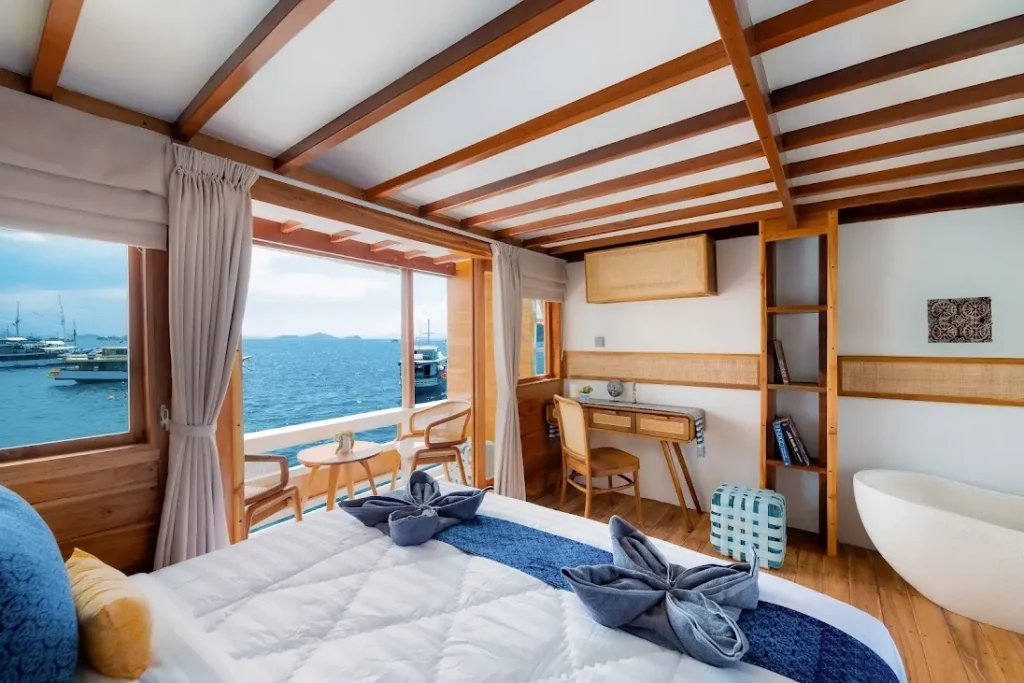
Staying on a liveaboard phinisi is the closest you can get to true immersion. These traditional Indonesian sailing vessels are designed for comfort and exploration, with shaded decks, air-conditioned cabins, and direct access to dive and snorkel sites. Sleeping onboard means waking up near a new island each morning — perhaps anchored off Rinca for an early dragon trek, or drifting near Manta Point where rays glide through the currents. You’re not just visiting the park — you’re moving through it, part of its daily pulse.
Alternatively, Labuan Bajo offers grounded comfort. The town has evolved into a full-service base with everything from boutique stays to international resorts. You’ll find reliable Wi-Fi, diverse dining, and easy access to transport. Staying here means day trips to Komodo or Rinca, typically lasting 8–12 hours round-trip. It’s a good fit if you want downtime after your excursions, or wish to experience Flores’ culture and cuisine beyond the park’s borders.
Choosing Between Sea and Shore
The decision between a liveaboard and a Labuan Bajo base often comes down to travel style, time, and what kind of connection you want with the environment.
A liveaboard delivers efficiency and depth. Without daily returns to town, you gain hours — and experiences. Arrive at Komodo Island at sunrise, when dragons are most active and crowds haven’t arrived. Snorkel at Batu Bolong in the late afternoon light, then dine under the stars as the boat gently sways. These trips range from 3 days to over a week, allowing you to reach remote spots like Sebayur or Nusa Kode, where coral gardens thrive and silence reigns. For divers and nature lovers, this is the most rewarding way to explore.
Staying in Labuan Bajo trades some immersion for convenience. You can adjust your itinerary daily, skip a trip to rest, or explore the town at your own pace. It’s also more budget-flexible — you can mix higher-end stays with low-cost tours. However, you’ll share popular sites with dozens of other boats, and your time on each island is limited by return schedules. If you’re combining your trip with other Flores destinations — like Kelimutu or Bajawa — a land-based base makes logistical sense.
How Long Should You Spend in the Komodo Archipelago?
To truly appreciate the region, time matters. A single day trip will show you highlights, but it barely scratches the surface. The minimum recommended stay is 3 days and 2 nights — enough to visit Komodo or Rinca, see Padar Island’s sweeping viewpoint, stop at Pink Beach, and snorkel one or two vibrant reefs.
With 4 days and 3 nights, you gain breathing room. Maybe you spend extra time tracking dragons with a ranger, dive twice at Manta Point, or hike to a secluded bay. Longer trips — 5 days and up — open access to quieter islands, extended dives, and encounters with seasonal wildlife like nesting turtles or passing whales.
Liveaboard itineraries are carefully paced to balance adventure and rest. Mornings are for guided treks and water activities, afternoons for sailing between islands, and evenings for unwinding onboard. The longer you stay, the more you sync with the natural rhythm of the sea. For many, 7 to 11-day journeys become transformative — less a vacation, more a voyage through one of Indonesia’s most untamed marine landscapes.
Gallery

Frequently Asked Questions
Can you camp overnight on Komodo Island?
Is it safe to stay on a liveaboard in Komodo National Park?
Do liveaboards provide snorkeling and diving equipment?
How do I book a liveaboard trip to Komodo National Park?
Related Blog Posts
Komodo Day Trip vs Overnight: Find Your Perfect Way to Explore the…
Discover the difference between Komodo day trip and overnight liveaboard with Boat Komodo Trip. Plan your perfect…
Read more →
Can You Stay in Raja Ampat? Your Accommodation Guide
Yes, you can stay in Raja Ampat — and how you stay shapes your journey. Discover the best options and plan your trip…
Read more →
Where to Stay in Labuan Bajo: Top Picks for Every Budget
Discover the best places to stay in Labuan Bajo, from budget-friendly options to luxury resorts. Plan your trip with…
Read more →Where to Stay in Misool: Expert Insights
Discover the best places to stay in Misool, Raja Ampat, from eco-resorts to liveaboards. Learn how to choose the…
Read more →
10 Best Luxury Hotels in Labuan Bajo: A Luxurious Stay at the Gateway…
Discover the best luxury hotels in Labuan Bajo, including 5-star resorts, exclusive hotels, and ideal locations for a…
Read more →